Is Enamel Paint Better Than Latex for Trim in Lakeville, Minnesota?
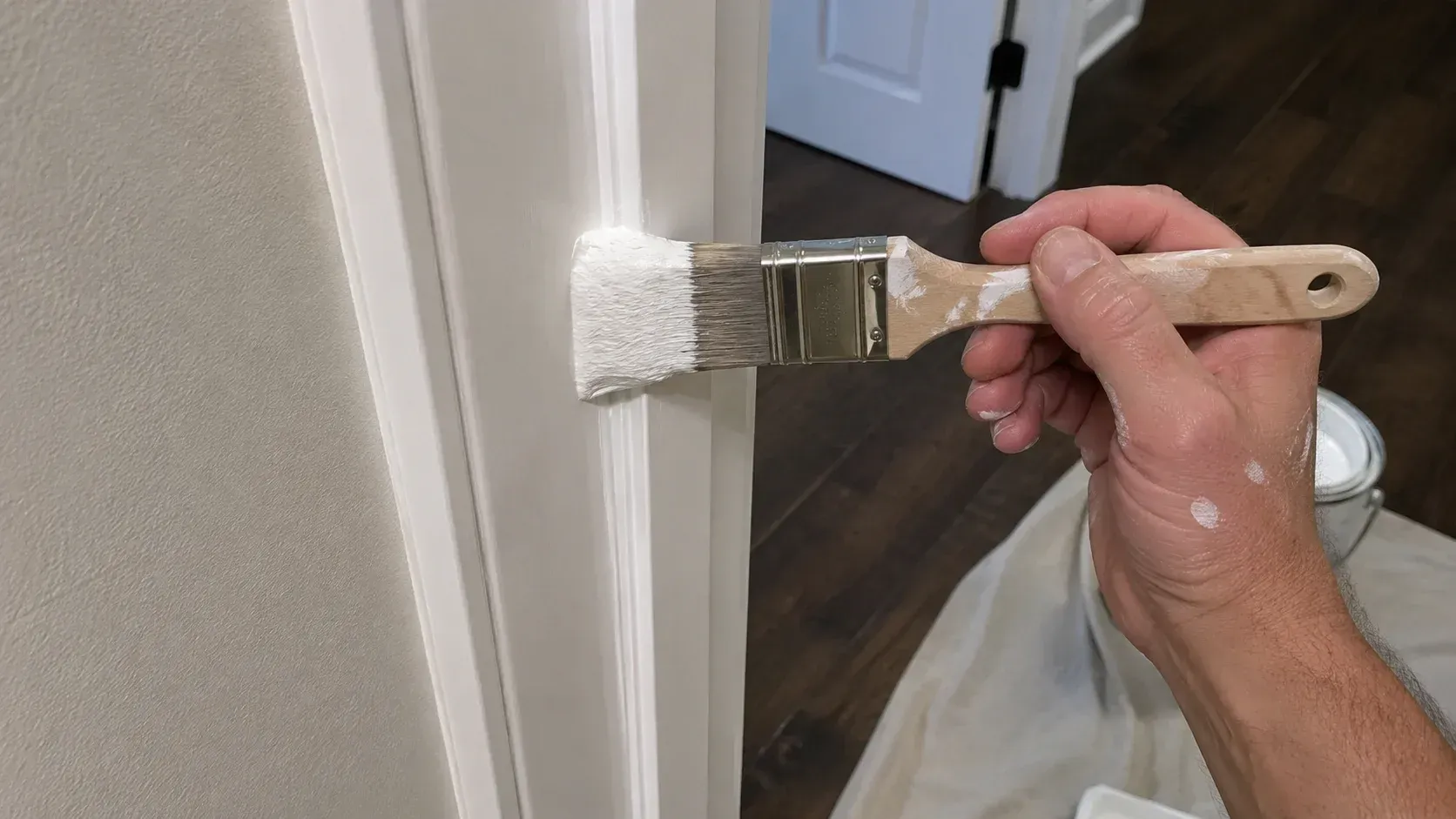
Table of Contents
- Introduction
- What Enamel and Latex Actually Mean
- How They Compare on Key Performance Factors
- Why Minnesota Homes Have a Specific Consideration
- Which Option Most Painters Recommend for Trim Today
- When Traditional Oil-Based Enamel Still Makes Sense
- What to Ask Before You Buy
- Conclusion
- Not Sure Which Paint to Use on Your Trim?
- Frequently Asked Questions
Key Takeaways
- The line between enamel and latex has blurred significantly — most quality interior trim paints today are water-based latex enamels that combine easy cleanup with a hard, durable finish.
- Traditional oil-based enamel levels out beautifully and cures very hard, but it yellows over time, takes longer to dry, and requires solvent for cleanup.
- For most Lakeville homeowners painting trim, a high-quality water-based alkyd or latex enamel is the practical choice: durable, non-yellowing, and easier to work with.
- The finish level (semi-gloss or gloss) matters as much as the paint type for trim durability and appearance.
- Surface preparation — cleaning, light sanding, and priming bare wood — affects the result more than which paint you choose.
Introduction
For interior trim in Lakeville, Minnesota, enamel paint is often the more durable, harder-wearing choice, while latex is easier to work with and maintain. Neither one is better in every situation, so the right answer comes down to the room, how much handling the trim takes, and the finish you are after.
This matters because trim takes more abuse than walls do. Door frames, baseboards, window casings, and crown molding get bumped, cleaned, and touched constantly, so the paint on them needs to hold up. Choosing well is part of any quality interior painting services project, and understanding the trade-offs helps you make a decision you will be happy with for years.
What Enamel and Latex Actually Mean
These terms are worth clarifying before comparing them, because they are often used loosely.
Enamel is not a specific type of paint formula. It describes a paint that dries to a hard, smooth finish rather than a soft, chalky one. Both oil-based and water-based paints can be enamels. When someone says "enamel paint," they may mean oil-based enamel, water-based enamel, or a water-based alkyd — which is a hybrid product that behaves more like oil but cleans up like latex.
Latex refers to water-based paint that uses acrylic or vinyl resins as the binder. Modern latex paints formulated for trim are often sold as "latex enamel," meaning they dry to the hard, cleanable surface associated with traditional enamel, using a water-based formula.
The practical result is that many products labeled "enamel" today are water-based, and many products labeled "latex" for trim are enamels. The distinction that matters more for a trim project is oil-based versus water-based, and high-quality versus budget.
How They Compare on Key Performance Factors
Here is how traditional oil-based enamel and water-based latex enamel compare across the factors that matter most for trim work.
Hardness and Durability. Oil-based enamel cures to an extremely hard surface that resists scratching and wear. High-quality water-based alkyds and latex enamels have closed the gap significantly and are durable enough for any residential trim application. Budget latex paint is softer and less durable — the difference here is product quality as much as oil versus water.
Leveling and Finish Smoothness. Oil-based paint flows and levels out well, which hides brush marks and produces a glassy finish without much effort. Water-based paints dry faster, which means brush marks have less time to level before the paint sets. This can be managed with the right brush, technique, and product, but it is a real difference, especially for less experienced painters.
Yellowing. Oil-based enamel yellows over time, especially in areas with limited light. White and off-white trim painted with oil-based products will shift noticeably in color within a few years. Water-based products do not yellow and maintain their original color far better over time. This is one of the clearest advantages of water-based for most trim work.
Dry Time and Recoat Time. Water-based paints dry to the touch in an hour or two and can typically be recoated in four hours. Oil-based enamel takes 8 to 24 hours to dry between coats. For a multi-day painting project, this makes a real difference in how quickly work can be completed.
Cleanup. Water-based paint cleans up with soap and water. Oil-based requires mineral spirits or paint thinner, which adds cost, creates fumes, and requires proper disposal. This is a practical consideration that affects both the painter and the homeowner during the project.
VOCs and Odor. Traditional oil-based enamel has high volatile organic compound content and produces significant fumes during application and curing. Water-based products have lower VOCs and much less odor, which matters in an occupied home.
Why Minnesota Homes Have a Specific Consideration
Minnesota's seasonal humidity changes affect interior wood trim in ways that matter for paint selection.
Wood trim expands and contracts as the home's humidity changes between humid summers and the very dry heating season in winter. Oil-based enamel cures to a more rigid film that can crack and chip as the wood moves. Water-based paints, especially modern latex enamels and water-based alkyds, tend to be slightly more flexible and maintain adhesion better through those humidity cycles.
This is one reason the industry shift toward water-based products for trim has been well-received in northern climates. The flexibility advantage is not dramatic, but over many cycles it contributes to a paint job that holds up better on trim that moves with the seasons.
Which Option Most Painters Recommend for Trim Today
Among professional painters in the Twin Cities area, water-based alkyd hybrids have become the preferred trim product for most projects. These paints use a water-based formula but include alkyd resins that improve leveling and hardness compared to standard latex. They clean up with water, have lower VOCs than oil-based products, dry faster, and do not yellow.
Brands like Benjamin Moore Advance, Sherwin-Williams Emerald Urethane, and similar premium water-based trim paints are common recommendations. These are not budget products — they cost more than entry-level latex — but they perform well and are genuinely easier to work with than oil-based alternatives.
Standard high-quality latex enamel in semi-gloss or gloss is also a sound choice for most trim applications, especially on previously painted surfaces that are in good condition.
When Traditional Oil-Based Enamel Still Makes Sense
Oil-based enamel is not obsolete, and there are situations where its specific properties are worth the trade-offs.
On bare or heavily weathered wood, oil-based primer and paint penetrates the wood more deeply and provides excellent adhesion, which can be useful on raw wood trim or older millwork. For very high-wear applications like stair treads or cabinet interiors, the extreme hardness of oil-based products is still an advantage.
Some painters and woodworkers prefer oil for detailed millwork because its superior leveling produces a glass-smooth finish with fewer brush marks. If appearance perfection on detailed trim is the priority and the project timeline allows for longer dry times, oil-based remains a valid choice.
The practical constraint is that oil-based paints are increasingly restricted in some areas due to VOC regulations, and they are simply harder to find in smaller quantities. For most homeowners doing a standard interior trim repaint, these trade-offs are not worth it. This is the same reasoning behind professional enamel painting on cabinets, doors, and trim, where a tough, smooth surface is the goal.
What to Ask Before You Buy
Rather than asking "enamel or latex," the more useful questions are these.
Is the trim previously painted or bare wood? Previously painted trim in good condition accepts either oil or water-based products well, though water-based over intact oil-based requires proper priming. Bare wood often benefits from an oil-based primer before topcoating with either type.
What sheen level do you need? Semi-gloss and gloss are standard for trim because they are washable and stand up to contact. The sheen level often matters more than the paint type for durability and appearance.
How much time is available? If you need to do multiple coats in a day or two, water-based is the practical choice. If time allows and finish smoothness is the priority, oil-based is still an option.
Sheen still matters regardless of type. Satin and semi-gloss paint finishes are the usual choices for trim because they clean easily and highlight detail, while higher gloss shows more surface imperfection. Whatever product you choose, thorough prep, sanding glossy spots, filling holes, and priming bare wood, does more for the result than the label on the can.
Conclusion
For most interior trim work in Lakeville homes, a quality water-based latex enamel or water-based alkyd is the better choice over traditional oil-based enamel. It is easier to apply, dries faster, cleans up with water, does not yellow, and holds up well through Minnesota's seasonal humidity cycles. Traditional oil-based enamel remains a legitimate option for specific applications — bare wood, high-wear surfaces, or when finish smoothness is the overriding priority — but it is no longer the default recommendation for most trim projects.
The bigger factor in how well any trim paint holds up is preparation and application technique rather than the choice between oil and water. A quality product applied over properly cleaned, lightly sanded, and primed surfaces will outperform any budget product regardless of formula.
Not Sure Which Paint to Use on Your Trim?
If you are weighing enamel against latex for the trim in your home, a quick conversation about your specific rooms can make the choice clearer. Feel free to contact us with questions about your trim, the finish you want, or how different products would suit your space in Lakeville or the surrounding Dakota County area. No pressure and no obligation, just clear guidance to help you decide.
Frequently Asked Questions
The line has blurred significantly. Most quality trim paints today are water-based latex enamels or water-based alkyds that combine easy cleanup with a hard, durable finish. For most trim projects, a high-quality water-based product is the practical choice over traditional oil-based enamel.
Yes. Oil-based enamel, especially in white and off-white colors, yellows noticeably over time, particularly in areas with limited light. Water-based products do not yellow and maintain their original color much better over time.
Yes, but with preparation. The existing oil-based surface should be lightly sanded to degloss it, cleaned, and primed with a bonding primer or shellac-based primer before applying a water-based topcoat. Skipping priming often leads to adhesion problems.
A water-based alkyd is a hybrid product that uses a water-based formula with alkyd resins for better leveling and hardness than standard latex. It cleans up with water, dries faster than oil-based, and does not yellow. For trim work, it is generally considered a step up from standard latex enamel.
Semi-gloss and gloss are standard for interior trim because they are washable and resist wear from contact. The sheen level often matters as much as the paint type for durability and appearance on trim.
Oil-based enamel typically takes 8 to 24 hours to dry between coats. Water-based latex dries to the touch in one to two hours and can be recoated in about four hours. This difference affects how quickly a multi-coat trim project can be completed.
Yes, significantly. Cleaning, lightly sanding, and priming the trim before painting affects how well any paint bonds and holds up over time. A quality product applied over poorly prepared surfaces will fail sooner than a standard product applied over properly prepared ones.