What Is the Best Time of Year to Paint a House Exterior in Eagan, Minnesota?
Key Takeaways
- The best time of year to paint a house exterior in Eagan, Minnesota is late spring through early fall, roughly late May to early October, when temperatures hold between 50°F and 85°F.
- Late summer into early September is often the most reliable stretch because rainfall drops and nights are still warm enough for paint to cure.
- Most exterior paints will not bond correctly below 50°F, though some newer formulas can be applied down to about 35°F.
- Humidity, dew point, rain, and direct sun matter just as much as the daytime high.
- Painting outside the recommended window can lead to peeling, blistering, and lap marks that shorten the life of the finish.
Table of Contents
- Why Timing Matters So Much in Minnesota
- The Temperature Range Exterior Paint Needs
- A Season-by-Season Look at Painting in Eagan
- Weather Factors Beyond the Thermometer
- How Poor Timing Shows Up on Your Siding Later
- Planning Tips for Eagan Homeowners
- Conclusion
- Thinking About Painting Your Home This Season?
- Frequently Asked Questions
Introduction
The best time of year to paint a house exterior in Eagan, Minnesota is late spring through early fall, generally late May to early October. Within that window, late summer into early September tends to give the most dependable results because the weather is drier and nights stay warm enough for paint to cure properly.
If you own a home or business in Eagan, this matters more than it would in a milder climate. Minnesota swings from subzero winters to humid 90-degree summers, and exterior paint has to survive all of it. Professional painting services in the area plan their schedules around these limits for a simple reason: paint applied in the wrong conditions fails early, no matter how good the product or prep work is.
This guide walks through each season, the weather factors that matter most, and how timing affects how long your finish holds up.
Why Timing Matters So Much in Minnesota
Exterior paint is a chemical coating, not just a color. It needs the right conditions to bond to the siding and cure into a hard protective film, and temperature and moisture control every step of that process.
Eagan has real winters, with average January lows near 8°F, and humid summers with July highs in the low to mid 80s. The area receives roughly 32 to 34 inches of precipitation per year, and June is usually the wettest month.
That leaves a defined painting season. Paint applied too early or too late may look fine the day the crew leaves, then peel or crack within a year or two. Timing is one of the few parts of an exterior painting project that costs nothing to get right.
The Temperature Range Exterior Paint Needs
Most exterior latex paints are made for application between 50°F and 85°F. Oil-based products have a similar floor, around 40°F to 45°F. Some low-temperature acrylics are rated down to 35°F, but they are the exception.
Two details trip people up. First, surface temperature matters, not just air temperature. Siding in direct sun can run 10 to 20 degrees hotter than the air, while shaded north walls stay cold into the morning.
Second, overnight temperatures count. Paint keeps curing for hours after application, so a cold first night can ruin adhesion even after a warm afternoon. In Eagan, this is the main risk with April and late October projects.
A Season-by-Season Look at Painting in Eagan
Spring (April to Early June)
Spring is workable with caveats. April still brings overnight frosts, and siding holds winter moisture longer than most people expect. May improves considerably, with average highs near 70°F.
The bigger issue is rain. Late May and June are the wettest stretch of the year, and wood siding usually needs one to two dry days after rain before it can accept paint, so spring start dates often shift to wait out storms.
Summer (June to August)
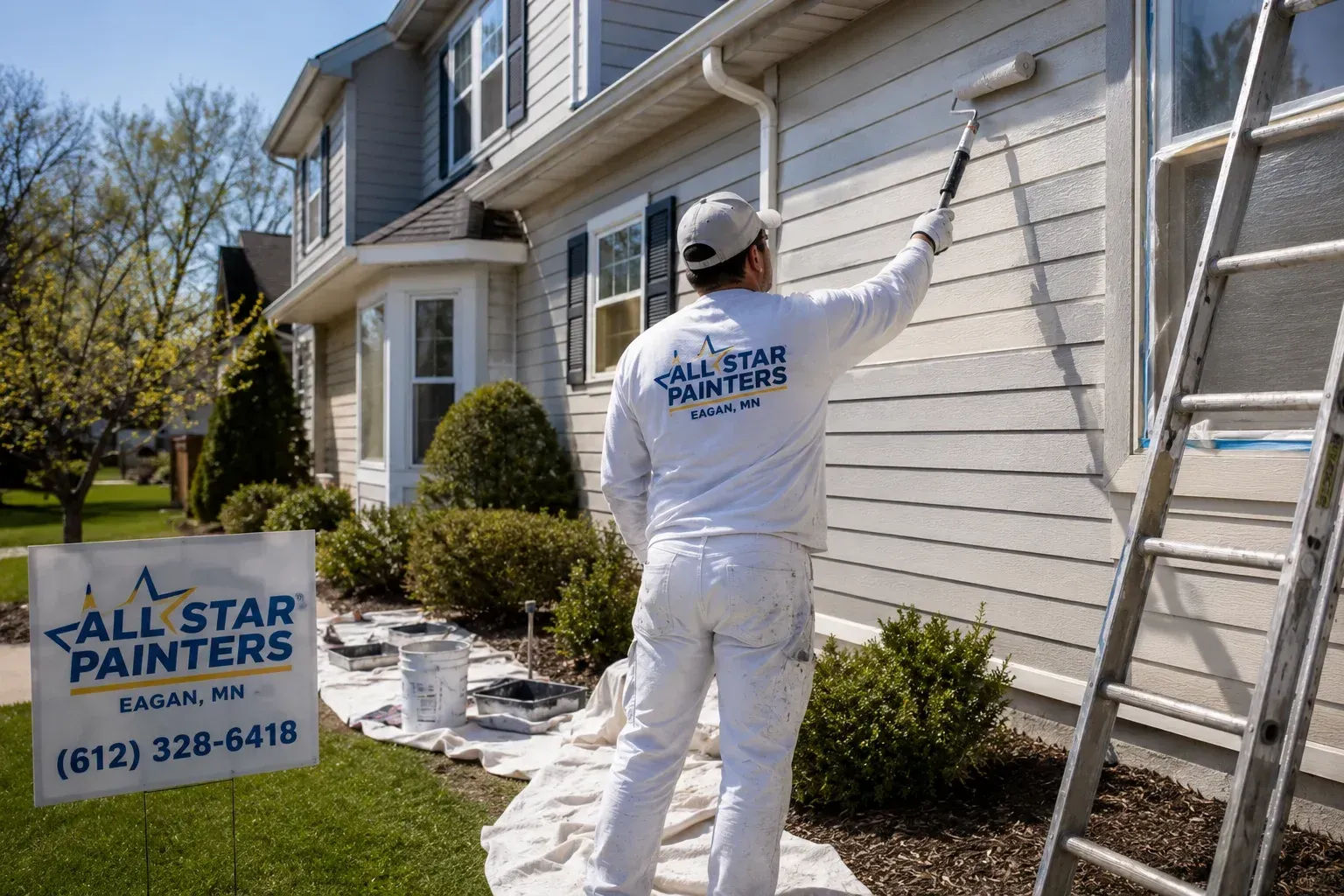
Summer offers long days and reliably warm temperatures, which makes it the busiest season for exterior work in the Twin Cities. The catch is heat. Paint applied to hot siding in direct sun dries too fast, causing lap marks and weak adhesion.
Crews work around this by following the shade, painting west walls in the morning and east walls in the afternoon. For a homeowner, the takeaway is that a 90-degree heat wave is a reason to pause, not push through.
Fall (September to Mid-October)
Early fall is arguably the sweet spot for exterior house painting in Eagan, MN. September averages highs in the low 70s, humidity drops, and rainfall thins out compared to June.
The season has a hard deadline, though. Eagan's first frost typically arrives in early to mid-October, and overnight lows dip below 50°F before that. September starts usually finish comfortably; mid-October starts are racing the weather.
Winter (November to March)
Exterior painting is off the table in a Minnesota winter. Paint will not cure below its minimum temperature, and frost, snow, and frozen siding prevent adhesion entirely.
Winter is still useful for planning. It is a good time to gather estimates, pick colors, and reserve a spring slot, since local painters often book early-season calendars months ahead.

Weather Factors Beyond the Thermometer
Humidity and Dew Point
High humidity slows drying and can leave a soft film that attracts dirt. The dew point is the bigger hazard. If siding cools to the dew point in the evening, moisture condenses on paint that has not finished drying and can leave glossy or brownish streaks. Many painters stop a few hours before evening dew is expected, especially in late August and September.
Rain and Surface Moisture
Fresh latex paint needs several hours before it can take light rain, and longer before it is truly washable. The surface also has to be dry going in. Damp siding pushes moisture back out through the new paint film, and blistering is the usual result.
Direct Sun and Wind
Strong sun overheats the surface, and steady wind dries the top layer while the paint underneath is still wet. Both produce a weak bond. Calm, overcast days in the 60s and 70s are close to ideal, even if they do not feel like classic painting weather.
How Poor Timing Shows Up on Your Siding Later
Failures from bad timing rarely appear right away. Peeling from cold-weather application often waits for the first freeze-thaw cycles of winter. Blistering from trapped moisture can take a full humid summer to surface. Lap marks from hot, fast drying show up sooner.
The sheen you choose affects how visible these flaws are. Flat and matte paint finishes hide application marks better than satin or semi-gloss, but no finish can make up for paint that never cured correctly. A well-timed exterior job on wood siding commonly lasts 7 to 10 years here; a poorly timed one may need attention in 2 to 3.
Planning Tips for Eagan Homeowners
Book early. The realistic painting season here runs about five months, so schedules fill fast for June through September start dates.
Watch the extended forecast, not just the day of. A good window means dry siding going in, no rain for at least 24 hours after, and overnight lows above the paint's minimum temperature.
For a May or October project, ask what products your painter plans to use and their temperature ratings. And expect some flexibility in the schedule. A crew willing to pause for conditions is protecting your finish, not padding the timeline.
Conclusion
For property owners in Eagan, the best time of year to paint a house exterior is late May through early October, with late summer and early September offering the most consistent conditions. Temperature is the first constraint, since most paints need surfaces and overnight air above 50°F, but humidity, dew point, rain, and sun exposure all influence how well the coating bonds and cures.
Spring works with careful scheduling around rain, summer with attention to heat, and early fall combines dry weather with mild temperatures. Winter is for planning rather than painting. Knowing these limits helps you schedule realistically and get a finish that protects your home for years instead of seasons.
Thinking About Painting Your Home This Season?
If you are weighing the timing for an exterior project in Eagan or nearby Dakota County, a short conversation can clear up a lot. Feel free to
contact us with questions about scheduling windows, product options for your siding, or what a realistic timeline looks like for your property. No pressure and no obligation, just straightforward answers so you can plan with confidence.
Frequently Asked Questions
What is the earliest month you can paint a house exterior in Eagan, MN?
May is usually the earliest practical month. April afternoons can be warm enough, but overnight lows and lingering surface moisture often fall outside what standard exterior paints require.
Can exterior paint be applied in October in Minnesota?
Early October is possible in a mild year, but the window is narrow. Overnight lows in Eagan regularly drop below 50°F by mid-month, so projects that cannot finish early in the month are often better moved to spring.
What temperature is too cold for exterior painting?
Most latex exterior paints should not be applied below 50°F, including overnight while the paint cures. Some acrylics are rated down to 35°F. Check the product's data sheet rather than relying on a general rule.
How long does exterior paint need to dry before rain?
Most latex paints can handle light rain after about 4 to 6 hours in warm, dry weather, but full cure takes days to weeks. A forecast with no rain for 24 hours after application is the safer target.
Is summer humidity in Minnesota a problem for exterior painting?
It can be. High humidity slows drying and raises the risk of streaking on fresh paint, so crews often paint earlier in the day and stop before evening dew forms.
How long should exterior paint last in the Eagan climate?
On wood siding, a well-timed, properly prepped paint job commonly lasts 7 to 10 years in Minnesota conditions. Fiber cement and metal siding often hold paint longer. Sun exposure, siding condition, and paint quality all affect the lifespan.